
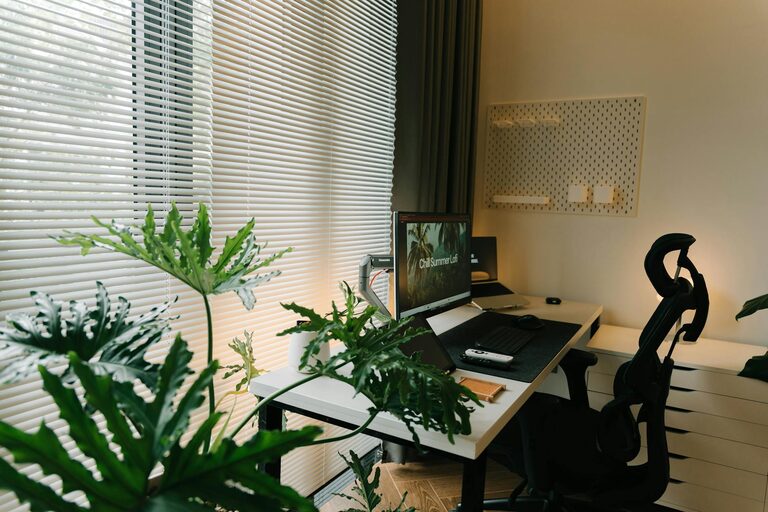
Creating a home office that is both relaxing and productive can make a significant difference to your workday. Whether you’re new to working from home or looking to improve your current setup, a thoughtful environment helps maintain focus, reduce stress, and enhance overall well-being. Here are some practical tips to design a space that supports both comfort and effectiveness.
Choose the Right Location
Find a Quiet Spot
Select a part of your home that is away from noise and distractions. This could be a spare room, a quiet corner, or even a section of your living room partitioned off for work. The quieter the space, the easier it is to concentrate.
Consider Natural Light
Natural light positively influences mood and alertness. Position your desk near a window where you can get daylight without glare on your screen. If natural light is limited, use a desk lamp with adjustable brightness and colour temperature to mimic natural light.
Invest in Comfortable and Ergonomic Furniture
Desk and Chair
A sturdy desk at the correct height and an ergonomic chair that supports your back are fundamental. Proper seating posture can reduce fatigue and prevent long-term discomfort.
Accessories for Comfort
Consider accessories such as a footrest, wrist supports, or an adjustable monitor stand to enhance comfort and reduce strain.
Keep Clutter to a Minimum
Declutter Regularly
A tidy workspace helps clear your mind. Keep only essential items on your desk and store everything else neatly.
Use Organisers
Desk organisers, filing cabinets, or shelves can keep documents and stationery well arranged. Label storage to find what you need quickly.
Bring in Calming Elements
Personal Touches
Add a few personal items you love, such as photos, inspirational quotes, or souvenirs to make the space feel inviting.
Plants
Indoor plants improve air quality and provide a sense of calm. Low-maintenance plants like succulents or spider plants are good choices for busy environments.
Colour Scheme
Opt for soothing colours like soft blues, greens, or neutrals. These shades can help promote relaxation and reduce anxiety.
Control Lighting and Noise
Adjustable Lighting
Use a combination of ambient, task, and accent lighting to prevent eye strain and create a pleasant atmosphere.
Noise Management
Use noise-cancelling headphones or a white noise machine if background sounds are distracting. Alternatively, soft instrumental music can improve concentration for some people.
Establish Smart Technology Habits
Organise Cables
Use cable ties and organisers to avoid tangled wires, which clutter your workspace and cause frustration.
Minimise Digital Distractions
Turn off unnecessary notifications on your devices while working to maintain focus.
Create a Routine and Boundaries
Set Working Hours
Having clear start and finish times helps separate work from personal life, even when working from home.
Take Regular Breaks
Use techniques like the Pomodoro method (work for 25 minutes, then break for 5) to maintain energy and reduce burnout.
Designate Your Workspace
Whenever possible, use your home office solely for work. This helps your brain associate the space with focus and productivity, making it easier to switch on and off mentally.
Maintain Air Quality and Temperature
Ventilation
Keep your workspace well ventilated to stay alert and comfortable. Open windows when possible or use air purifiers to improve air quality.
Temperature Control
Ensure your room temperature is comfortable—not too hot or cold—as this affects concentration and motivation.
Stay Hydrated and Organise Snacks
Keep Water Handy
Having a bottle of water nearby encourages regular hydration, which is important for mental clarity and overall health.
Healthy Snacks
Store some healthy snacks in your office, such as nuts or fruit, to keep your energy levels steady.
—
A well-designed home office blends functionality with comfort, allowing you to work efficiently while feeling relaxed. By focusing on thoughtful location choice, ergonomic furniture, decluttering, lighting, and personal touches, you can create a space that supports your productivity and wellbeing. Try implementing a few of these tips to transform your workspace into a place where work feels less like a chore and more like a comfortable routine.